The power of Ajna chakra
“What you seek is seeking you.” ~ Rumi
Generally speaking, we consider Chakras as energetic points of the subtle body, going upwards the spine, our main energy channel, Sushumna nadi, starting with the pelvis and moving all the way up to the crown of our head. The chakras accumulate energy close to important glands and organs of the physical body, so that there is a deep connection between the subtle/energetic body and the physical body.
Physically, the third eye chakra (Ajna) is the sixth one, starting from the base upwards and it is located in the center of our forehead, right between the eyebrows and it is often represented with the color indigo. It has the symbol of two lotus petals, a downward-facing triangle and the symbol OM in the center of it. From the bodily perspective, Ajna chakra influences the growth and development of the pineal gland, the hypothalamus (generally, our endocrine system), as well as our sense of vision. Energetically, it is considered as the center of universal consciousness, clarity, knowledge, and intuition, therefore going beyond the physical vision and more into our subconscious. Whenever you hear about someone having a sixth sense, it is the Ajna chakra we are referring to, seeing beyond words, actions and thoughts. Moreover, the third eye chakra helps us to make sense of the world beyond what we see externally and more about what we understand internally. Think about it also as a personal inner teacher, that leads us toward clarity and meaning in our everyday life. The third eye is more than just the center of intuition; it’s a portal to a reality where the spiritual and physical merge into one, understanding that we are part of something bigger and beautiful, something that transcends the ordinary.
Postures recommended to balance the Ajna chakra are: forward folds like Balasana (Child’s pose), Marichyasana (Seated twisted pose), Dolphin pose, Wide-legged standing pose, Uttanasana as well as Pranayama, e.g. Nadi Shodana or alternate nostril breathing or Ujjayi breath with focus on the space between the eyebrows, creating more mental space and ability to notice gentle pauses that could potentially open up to deeper insights and a deeper sense of peace, stepping away from the ego and embracing the oneness with the Universe - a state of samadhi. Generally, practising both asana and pranayama can help one become stronger and ready to safely explore deeper levels of consciousness.
Ajna chakra is considered one of the superior chakras, due to its connection to a deeper self and to spirituality, meaning when it is in balance, then it is easier for all the other chakras below to also come into perfect alignment. It is said that blockages around this chakra stem from early childhood experiences and conditioning, for example being raised in a close-minded community or struggling with anxiety and independence from our caregivers. Children with a very rich imagination and an inner ability to be creative or drawn to creative processes are usually perceived as more able to connect to this particular chakra and usually they are able to carry this further into their adult life.
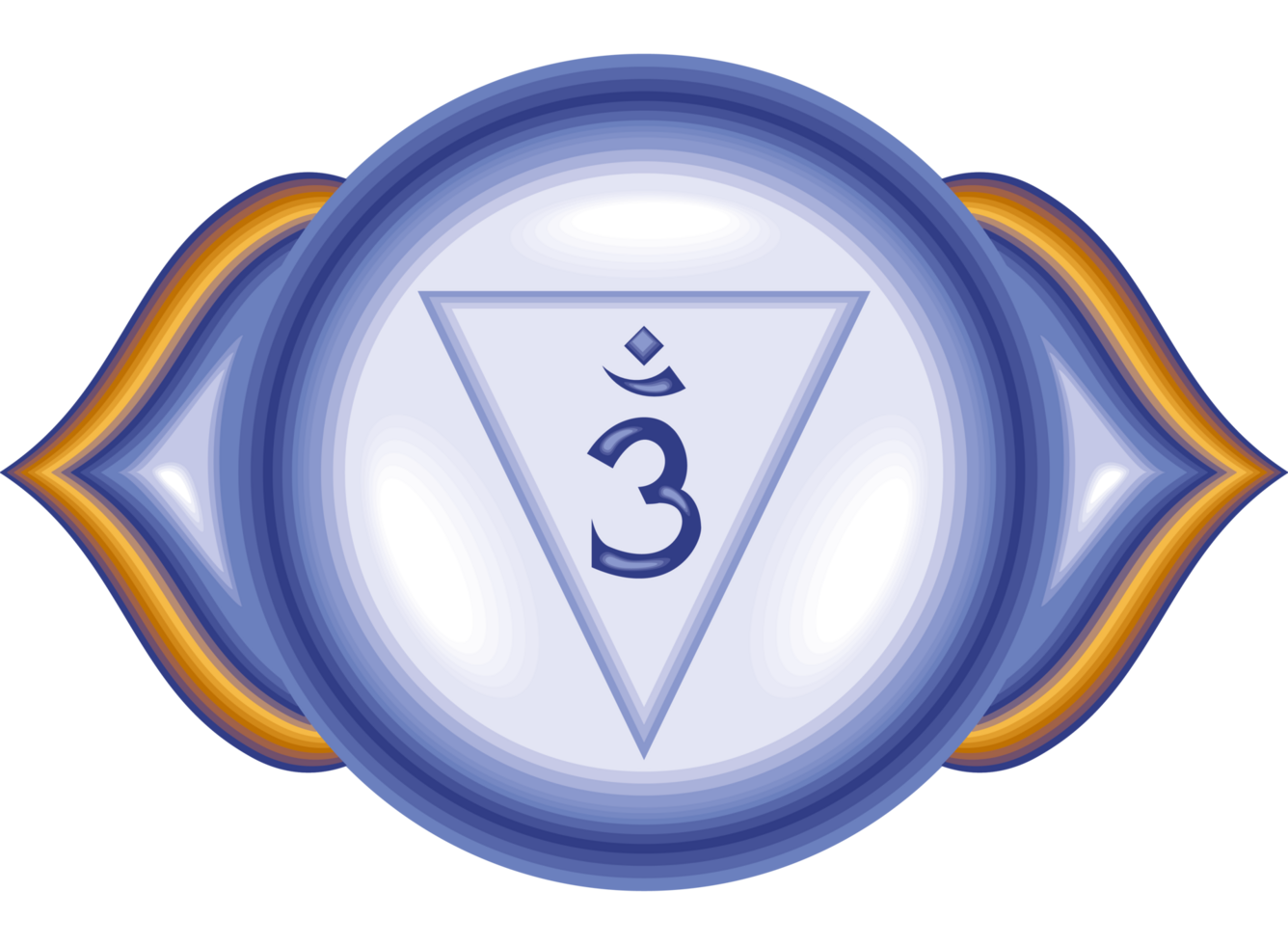
Ajna Chakra in a symbolic representation
When we have a balanced Ajna chakra, we can observe the following symptoms in our everyday life: increased intuition and awareness, greater imagination and insights, self-confidence, mental clarity in taking decisions. The best way to notice if there is any imbalance around this chakra is to start getting more connected to our feelings, emotions and pattern of thoughts. Whenever we are imbalanced from a third eye chakra perspective, it often means we are disconnected from our intuition, we tend to lack trust in others and ourselves, we often feel a sense of deep emptiness and loneliness, even when we are surrounded by other people, it is as if we are losing ourselves and we feel the rug pulled under our feet. We also might fear to take decisions and lack insights when trying to solve an issue or a problem, due to a restless and noisy mind. On another level, it can also create a lot of judgement and resistance to whatever happens in life. On a physical level, we might experience migraines, headaches, blurry vision, insomnia and a feeling of permanent exhaustion.
Third eye chakra healing is the practice of cleansing, opening, and balancing the third eye chakra within our physical and energetic body. A journey into this particular chakra requires one to release those superficial parts of oneself, attachments and ego and to open the heart and the mind to what the Universe has to tell us. This process of getting the third eye activated requires patience, consistency and a willingness to let go of conditioning and previous beliefs, embracing a sense of higher intuition and discomfort. That is why grounding practices are a great way to complement this process, to allow nature and experience to unfold themselves, at their own pace, reminding ourselves of the importance of staying present. The experience of tapping into a higher knowledge and intuition is very transformative, in its core. It is about understanding the interconnectedness of everything, we as part of something bigger, life itself in its complexity. It is about a clear and focused understanding, emotional balance as well as a path to spiritual enlightenment. Shutting down our ego can open doors to honouring our inner wisdom, really paying attention to ourselves and letting go of attachments. This vision can connect us essentially to the divine, the very essence of existence. It is an invitation for us to see beyond our senses, our immediate desires, wishes and expectations.
Opening and ultimately healing the third chakra can bring one closer to a bird’s eye perspective, free oneself from limiting beliefs and perceive life as more fluid and vibrant with more wisdom and compassion towards oneself and others. It can definitely lead one to pursue dreams with a clearer vision and purpose, staying connected to their true path and embracing growth fully.
Other ways of connecting to the third chakra beyond Yoga and meditation are reading books, trying new activities outside of one’s comfort zone, practising mindfulness in daily life and tasks for example avoiding jumping from one thing to another, making sure one gets adequate sleep, introducing a balanced diet, getting enough sunlight exposure and so much more.
*****************************************************************